
Article
[Naeil Shinmun, Nov 27, 2019]
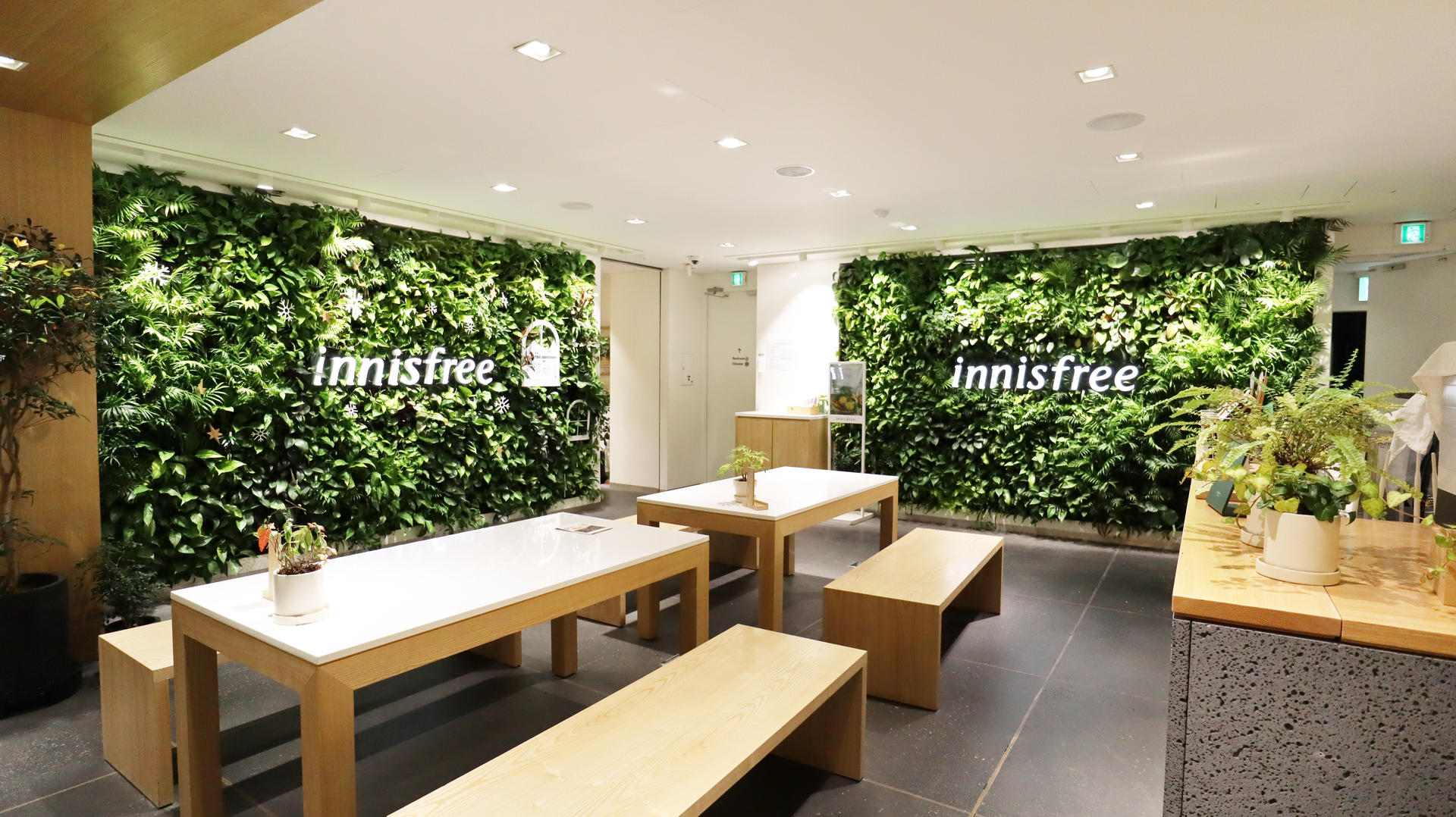
Innisfree Myeongdong Branch 3, in Chungmuro 1-ga, Seoul. Almost everyone passing by takes a closer look at the Innisfree signboard, where green leaves flaunt their vitality. At first glance, most assume the leaves must be artificial — but on touching one, the surprise hits: they are real plants. The company that has installed wall greening at over 80 Innisfree stores nationwide is Changjowon Co., Ltd., headquartered in Gunpo.
Living Air Purifiers — Green Leaves That Eat Fine Dust
Changjowon's corporate philosophy of "saving people and saving nature" is rooted in the conviction of "recreating nature, saving people from harmful environments, and returning to nature for restoration." Notably, the company hires graduates of children's homes for 50% of its workforce, pursuing a value of "togetherness" that integrates marginalized members into society.
CEO Park Chang-il said, "Changjowon delivers wall greening perfectly fitted to each architectural environment." "Our services include wall greening design tailored for businesses, installation of fresh and artificial plants, and the corresponding maintenance," he added. "From the design concept for our clients' successful business, through installation and continuous upkeep, we will provide wall greening at the highest level."
Changjowon's business is broadly composed of three areas: wall greening using vertical gardens, garden blocks, green blocks, and band greenery; the planning, direction, and construction of botanical gardens and flower expos; and indoor/outdoor landscaping. There is also a landscape management business specializing in landscape management agency for public agencies and corporations, landscape management consulting, indoor landscaping and pot management, botanical garden management, and the provision of seasonal landscape management manuals.
Reference projects landscaped by Changjowon include the International Vaccine Institute (IVI), Samsung SDS Sangam, Samsung SDS Gwacheon, Incheon International Airport Lounge L, Mokdong Hyundai Hyperion, Ansan Good Morning Bakery, Stay V Hotel, Nanoori Hospital, and the Bundang Parkview Penthouse.
Wall greening projects include Daewoo E&C's Euljiro Sewoon Office, Seogwipo City Hall Annex 2, Seocho Jangduk Korean Medicine Hospital, Magok Seoul Botanic Garden, Sindorim CineQ Theater, LG Uplus, Toyota Motors, with Park One scheduled for 2020.
Top Air Purification — Wall Greening That Creates Pleasant Environments
The greatest advantage of wall greening lies in creating pleasant environments through air purification. It removes many toxic chemicals from the air — formaldehyde, carbon dioxide, benzene, toluene — improving air quality. Through plants' transpiration, indoor temperature and humidity remain stable, mitigating urban heat island effects and saving energy. Replacing the bleak gray of concrete walls with green transforms cityscapes into more pleasant spaces, while alleviating the oppressive sense of vertical artificial structures.
Director Kim Ki-chan explained, "Changjowon possesses ready expertise and trained personnel in-house, and prepares and installs every step of the work directly," adding, "the Garden Block developed by Changjowon is designed to be selected and applied to suit each site's situation, optimized for installation and operational management."
Indoor wall greening proceeds through stages: waterproof film installation, bracket-screw fixing, piping and nozzle installation, case mounting, plant placement, solenoid valves, and timer setup. Plants used include Scindapsus, Sanhosu, Orange Jasmine, Table Palm, Spathiphyllum, Asplenium nidus, Ivy, Syngonium, Boston fern, Macoya, Alocasia 'Dragon Scale', Dendron, Congo, Chlorophytum, and Sapphire.
Because these plants are alive, continuous care is essential. Changjowon's structured management system maintains four-season green. Monthly checks include die-off inspection, pest control, removal of yellow leaves and dead branches, pruning, weeding, water-supply verification at modules, system and timer checks, trench and filter cleaning, plus fertilizer and chemical treatments as needed.
"To achieve fine-dust-removal effects, you generally need one pot per 3.3㎡. Tests show a 6-pyeong (about 20㎡) living room needs 10.8 small plants, 7.2 medium plants, or 3.6 large plants for proper air purification. Try growing the natural air-purifiers — green-leaf plants — that consume fine dust. For pleasant environments, wall greening is the very best."